

Bifold doors represent a versatile solution for modern homes, offering a unique way to bridge the gap between indoor and outdoor spaces or to divide internal rooms without losing floor area. This guide outlines the different configurations, materials, and technical considerations you need to understand before choosing the best internal bi folding doors for your project.
While the terms are often used interchangeably, a bifold door is specifically a door system made of multiple panels that fold back against each other in a concertina motion.
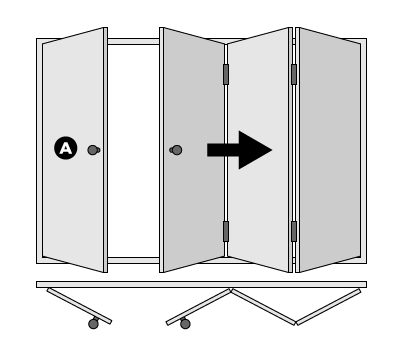
The way your doors stack and open depends on the number of panels and the hardware configuration you choose.
.png)
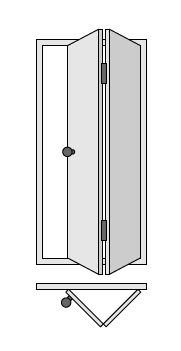
For smaller internal spaces where a traditional swing door would hit furniture or walls, a single bifold door is a high-impact, space-saving choice. Because a concertina door folds neatly, it can give you more space back in a room or a tight space.
The number of panels you choose affects the "stacking depth"—the amount of space the internal folding doors take up when fully open. Even with the same number of panels, various configurations are possible to tailor bifolding door systems to your specific needs.
A traffic leaf or access door is an essential feature for external doors used daily.
Express Doors Direct offers specific interior bifold doors tailored to different installation needs.
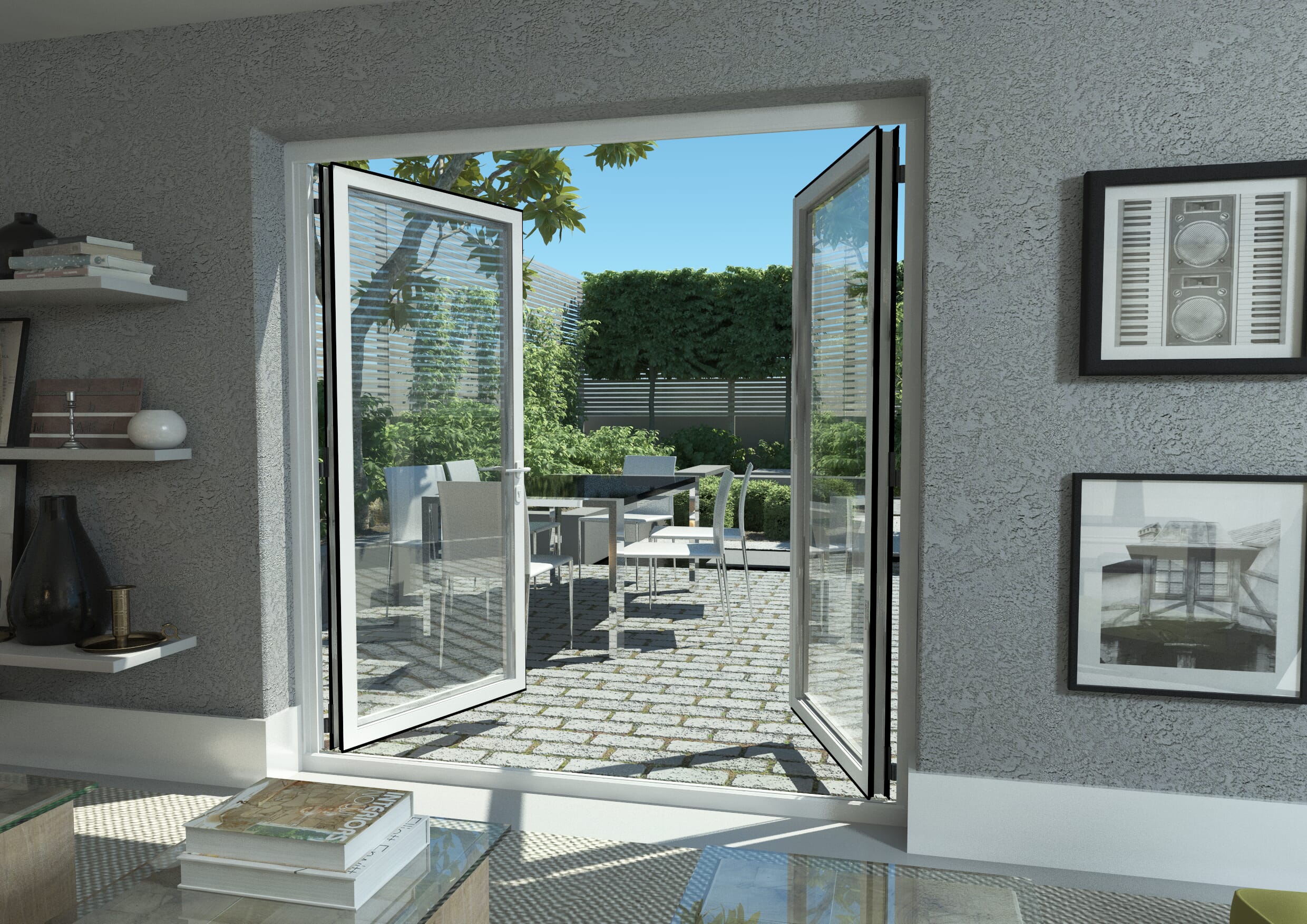
Take a look at our guide to bifold vs french vs sliding doors to decide which type is best for you.
Choosing the right material impacts the longevity, maintenance, and thermal performance of your doors.
While they may look similar, internal and external bifold doors have different structural requirements.
The threshold is the track at the bottom of the door, and your choice here affects both weatherproofing and accessibility.
Flush thresholds: These sit level with your finished floor, creating a seamless transition that is perfect for wheelchairs and prams.
Standard (weathered) thresholds: These feature a small upstand to block driving rain, making them the safer choice for exposed external locations.
When you choose to install bifold doors, you'll need to consider how they operate. The way your bifold doors are supported determines how they feel during operation and what kind of structural preparation your opening requires. Most high-quality systems use one of two methods to move the door panels along the track.
Top hung systems carry the weight of the door leaves from the top track. This means the rollers are concealed within the head of the door frame, and the bottom track acts primarily as a guide to keep the doors in line.
In a bottom rolling system, the weight of the doors rests entirely on the bottom track. The top track simply keeps the panels upright and guided as they move.
|
Feature |
Top hung bifold doors |
Bottom rolling bifold doors |
|
Weight distribution |
Entire weight of the doors hangs from the top track |
Weight is supported entirely by the bottom track and rollers |
|
Operation |
Offers a very smooth, "gliding" feel as the doors hang vertically |
Stable movement but can feel heavier as the weight is on the floor |
|
Maintenance |
Top tracks stay cleaner, but pivots require occasional lubrication |
Requires frequent cleaning of the bottom track to prevent jamming |
|
Structural need |
Requires a heavy-duty lintel or RSJ to support the door load |
Can be installed in most openings as no overhead support is needed |
|
Floor finish |
Ideal for different floorings on each side of the door |
Best for continuous flooring or tiled surfaces |
|
Hardware |
Typically features height adjustments of 6mm to 10mm |
Often features a jamb-mounted bottom pivot for easier alignment |
Learn more about bifold door parts in our guide that talks you through the components of a bifold system.
Customising your doors allows them to blend seamlessly with your home's architecture.
Budgeting for bifold doors requires looking at both the initial purchase and long-term value.
Routine maintenance ensures your doors glide smoothly for years.
Finding the perfect bi fold doors is easier when you understand the options available. You might need timber doors with large glass panels or slimline options with two panels that fold away neatly, and the specifications are completely different.
This depends on your opening width. As a rule, panels should be between 700mm and 1000mm wide
Yes, though you may need to widen the opening to get the full "open wall" effect
High-quality bottom-rolling or top-hung systems allow even large sets to be moved with a single hand
Bifold doors come in various configurations including Standard Bi-Fold, where panels fold to one side; French Fold, featuring symmetrical panels meeting in the middle; and Traffic Door, which includes a single access door for convenient entry without opening all panels. Each type offers unique functionality and design benefits.
For internal use, top-hung timber bifold doors are generally the best choice. They offer a smooth, gliding operation without the need for a bulky bottom track that can trap dirt and create a trip hazard. Systems like the Roomfold Deluxe are particularly effective because they provide a "flush" floor finish, creating a seamless transition between rooms while maintaining the natural warmth and aesthetic of high-quality wood. However, the best bi folding doors for your home will vary depending on your needs. Find out how to choose the best internal bifold doors.
Proud stockists of....
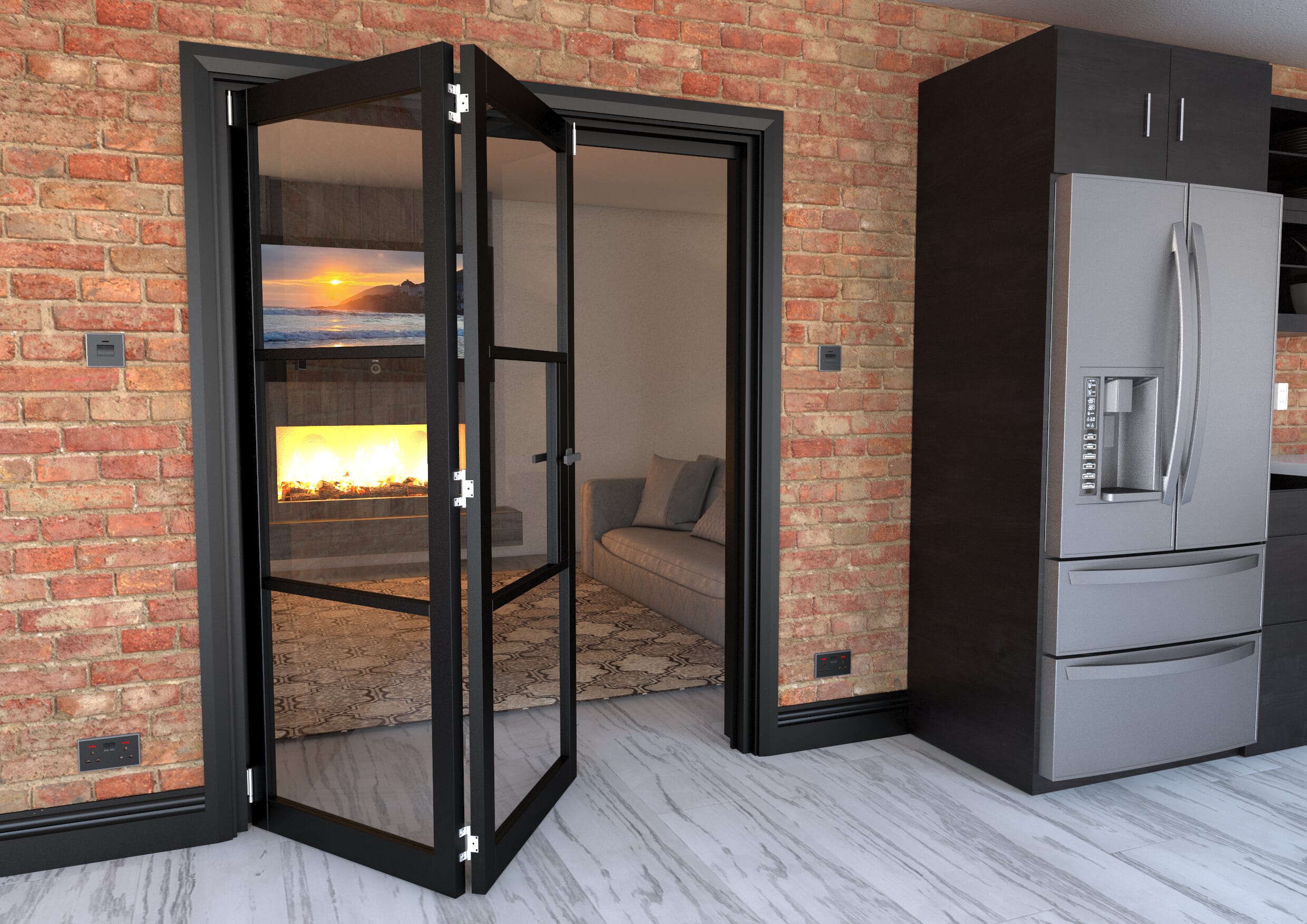
Bring industrial-inspired design into your home with our collection of heritage steel-look doors. Available in bifold, French and internal door options, these on-trend designs offer the distinctive appearance of traditional steel doors with the practicality of modern materials. Browse our range today and transform your living space with striking heritage style doors.
Trusted stockist of Climadoor; the Folding Doors brand.
© Express Doors Direct 2026. All rights reserved.
Company number 11557039.
Rated 4.3 out of 5 by our customers from 1932 reviews.




 Call us On